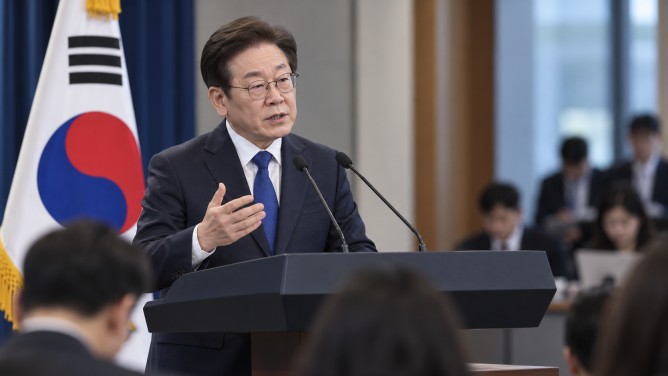
South Korea has emerged as a significant player in the global economic arena, recording the world’s second-largest current account surplus among major economies in the second quarter of the year. According to South Korean President Lee Jae Myung, this achievement underscores the country’s strengthening economic position on the world stage.
Data from the International Monetary Fund, obtained through the Bank of Korea, revealed that South Korea’s current account surplus reached an impressive US$116.63 billion between April and June. This figure places South Korea just behind China, which led with a surplus of US$193.72 billion during the same period. President Lee pointed out that South Korea’s surplus exceeded the combined surpluses of Germany and Japan, two traditionally strong economies.
President Lee emphasized that South Korea is transitioning from a follower of advanced economies to a nation that contributes to shaping the global economic landscape. He credited the success to the international performance of South Korean companies, especially in the semiconductor sector, which is pivotal for the development of artificial intelligence technologies.
In his remarks, Lee called for further efforts to capitalize on these economic gains by bolstering South Korea’s industrial competitiveness and increasing its potential growth rate. He suggested that building on these achievements is crucial for the country’s continued economic advancement and influence.
The semiconductor industry, in particular, has been a driving force behind South Korea’s robust economic performance. Its significant role in the development of cutting-edge technologies has positioned the country as a key contributor to global tech advancements.
As South Korea continues to navigate its role in the global economy, President Lee’s statements reflect a vision of sustained growth and increased international influence, urging the nation to maintain its competitive edge in key industries.