
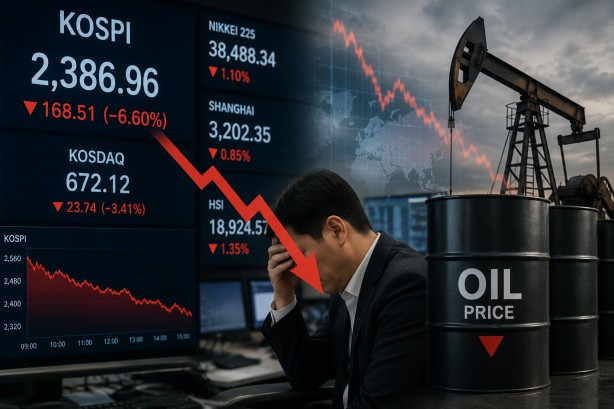
Global stock markets presented a mixed picture on Thursday, with Asian indices mostly experiencing declines. This downturn was notably driven by South Korea’s Kospi, which plummeted 6.6%, as the Bank of Korea unexpectedly raised interest rates. This move, coupled with significant losses in technology stocks, added pressure on the South Korean market. Among the hardest hit were SK Hynix and Samsung Electronics, which saw their shares fall by 11.2% and 8.2%, respectively.
Japan’s Nikkei 225 also faced a downturn, shedding 2.9% amidst a broader sell-off in chip-related stocks. Companies such as Kioxia, Tokyo Electron, Advantest, and SoftBank Group contributed to the decline, reflecting investor caution in the tech sector. In Taiwan, the Taiex index dipped 0.3% as investors awaited the earnings report from chip giant TSMC. Meanwhile, China’s Shanghai Composite Index dropped 0.9%, and Australia’s S&P/ASX 200 ended the day with slight losses.
In contrast to the general trend in Asia, Hong Kong’s Hang Seng Index rose by 1.7%. This increase was largely driven by an uptick in Alibaba shares, following the approval of Apple Intelligence’s AI service in China, which utilizes Alibaba’s Qwen model. The positive performance of Alibaba provided a lift to the Hong Kong market, setting it apart from its regional counterparts.
On the commodities front, oil prices saw a modest decline but remained high due to ongoing geopolitical tensions. Brent crude decreased by 0.4%, settling at $84.55 per barrel, while US crude edged down 0.2% to $79.34 per barrel. The persistent concerns over potential disruptions in shipping through the Strait of Hormuz continued to exert upward pressure on oil prices, despite the day’s easing.
In the United States, stock markets closed on a positive note the previous night, buoyed by favorable economic indicators. The market rally was supported by data showing easing inflation and robust corporate earnings, providing a degree of optimism amidst the global financial uncertainty.