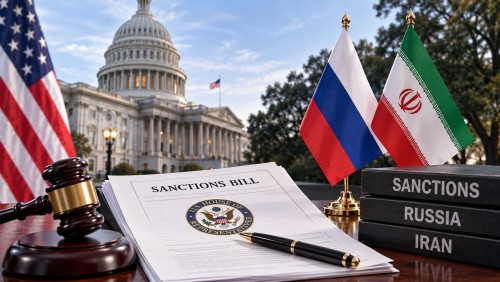
The passage of the Lindsey O. Graham Sanctioning Russia and Iran Act of 2026 by the US House of Representatives is poised to significantly amplify economic pressure on Russia and Iran, potentially reshaping international trade dynamics. With the legislation targeting Russian financial institutions and energy sectors, as well as imposing further tariffs on nations trading in Russian oil and gas, the global economic landscape could face substantial shifts.
On September 16, the House approved the bill with a 262-159 vote, following the Senate’s prior endorsement in August. Now awaiting President Donald Trump’s decision, the legislation aims to fortify existing sanctions against Russia over its continued military actions in Ukraine. The act also seeks to curb Iran’s financial and energy activities by extending the Iran Sanctions Act through 2031.
Key provisions in the legislation include sanctions against Russian officials and entities involved in circumventing existing restrictions, known as the shadow fleet. Moreover, countries facilitating such evasion or purchasing Russian energy resources could face tariffs as high as 100%. These measures reflect a concerted effort by the US to tighten its economic grip on these nations, hoping to influence their geopolitical strategies.
While the bill received bipartisan support, it wasn’t without controversy. Some lawmakers expressed concerns over the expanded presidential authority granted by the bill, particularly regarding tariffs and sanctions. These concerns highlight ongoing debates about the balance of power in crafting and enforcing foreign policy measures.
As the act moves to the President’s desk, its potential enactment underscores the evolving strategies in US foreign policy, particularly in leveraging economic tools to address international conflicts and align global trade practices with its diplomatic goals.