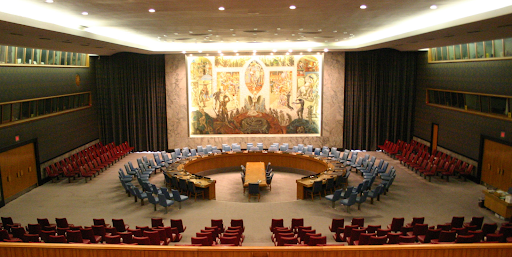
Russia and China warned on Monday that the UN Security Council is effectively sidelining itself from the future of Gaza by adopting a US-drafted resolution that provides no clear role for the global body. Both veto-wielding powers abstained from the vote, allowing the resolution endorsing President Donald Trump’s peace plan to pass. Their ambassadors, however, lodged strong complaints, arguing the resolution hands over control of the Palestinian enclave to a US-led initiative with no UN oversight.
Russian Ambassador Vasily Nebenzya was blunt in his assessment, telling the council it was “giving its blessing” to a US plan “on the basis of Washington’s promises.” He argued that the resolution gives “complete control” to two new entities: the “Board of Peace,” a transitional authority chaired by Trump, and an “international stabilization force” (ISF). Nebenzya stressed that the operational details, or “modalities,” of these groups “we know nothing about so far,” raising alarms about accountability.
The US-drafted resolution authorizes the ISF to conduct a full demilitarization of Gaza, including decommissioning all weapons. The Board of Peace, meanwhile, will oversee the enclave’s reconstruction. US Ambassador Mike Waltz defended the plan as a “possible pathway for Palestinian self-determination” and a way to “dismantle Hamas’ grip.” President Trump celebrated the vote as “historic,” promising to name the members of his board soon.
This new framework was immediately rejected by Hamas, the group that currently governs Gaza. In a statement, Hamas labeled the plan an “international guardianship” and defiantly stated it “will not disarm.” This stance puts Hamas on a collision course with the newly mandated ISF, threatening the very peace the resolution aims to achieve.
In a complex diplomatic twist, the Palestinian Authority, Hamas’s rival, welcomed the resolution. Diplomats said this support was crucial in persuading Russia not to use its veto. The PA’s support is likely linked to a controversial clause in the resolution that references a “credible pathway to… statehood,” a clause that has, in turn, drawn public opposition from Israeli Prime Minister Benjamin Netanyahu. This web of conflicting interests and the lack of full support from the Security Council’s permanent members place the new plan on unstable ground.