
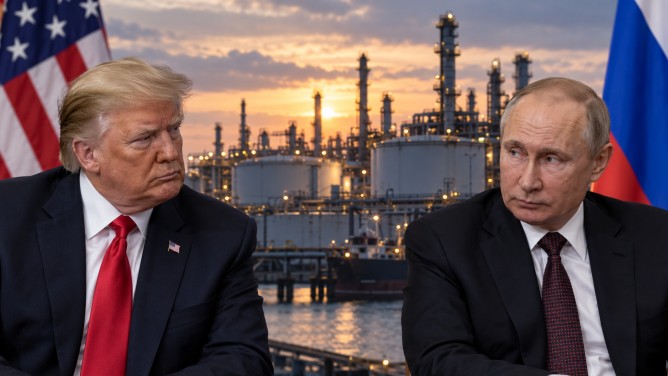
In a move that has sparked controversy, US President Donald Trump announced an agreement with Russian President Vladimir Putin to increase diesel supplies from Russia, despite ongoing sanctions against Moscow over its invasion of Ukraine. The deal, which includes an initial shipment of more than 300,000 tonnes of Russian diesel, aims to address high fuel costs for American farmers, ranchers, and truckers.
This decision has raised questions about the future of US sanctions on Russia and the administration’s commitment to limiting Russian energy revenues. Ukrainian President Volodymyr Zelenskyy criticized the agreement, expressing concern that the additional revenue from energy exports could bolster Russia’s military efforts in Ukraine. The announcement coincided with ongoing discussions between US and Ukrainian officials on potential resolutions to the conflict.
The Kremlin confirmed that energy supplies and the Ukraine conflict were topics during the Trump-Putin call. Russian officials indicated Moscow’s willingness to supply oil and petroleum products to international markets, further complicating the geopolitical landscape.
Following the announcement, the US Treasury Department issued a temporary license permitting certain Russian diesel shipments to reach global markets, providing sanctions relief for eligible cargoes until April 2027. This move has drawn criticism from US lawmakers, who argue that easing restrictions could undermine efforts to pressure Moscow into ending the war.
Energy analysts have cautioned that the additional supplies might have minimal impact on fuel prices, as Russian diesel shipments could be redirected from existing customers to new buyers. Additionally, Russia has faced its own domestic supply challenges due to attacks on its oil refineries.
The agreement underscores the complexities of balancing global energy needs with political and economic interests, as Washington navigates the dual goals of addressing rising fuel costs and supporting Ukraine in its conflict with Russia.