
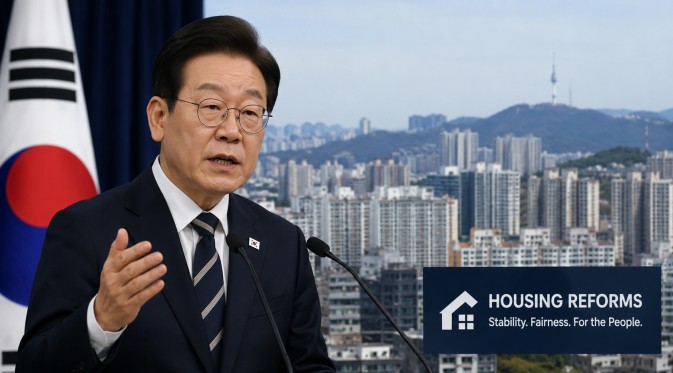
South Korean President Lee Jae Myung has vowed to advance with significant housing reforms, despite the likelihood of political repercussions. During a policy forum, President Lee emphasized the critical need to address the current property bubble, cautioning that failure to do so could result in long-term economic stagnation akin to Japan’s experience after its property market collapse.
President Lee highlighted several potential measures the government is considering to curb speculation and stabilize the housing market. These include increasing property holding taxes, adjusting capital gains taxes, and implementing stricter mortgage lending regulations. He expressed concern that without these interventions, South Korea could face a prolonged economic slowdown.
The proposed reforms are designed to target specific groups, aiming to protect single-home owners, lower-income households, and individuals residing outside the capital region. Conversely, the plan would impose heavier tax burdens on owners of multiple homes and high-value speculative properties. Additionally, President Lee proposed stricter controls on rental-deposit loans, with special exemptions for young people, newlyweds, and other vulnerable demographics.
Stressing the necessity of these challenging reforms for South Korea’s long-term economic stability, President Lee stated that the government must be prepared to incur political costs to avert a broader economic crisis. The nation anticipates the announcement of a more comprehensive real estate policy package later this month or in early August.