
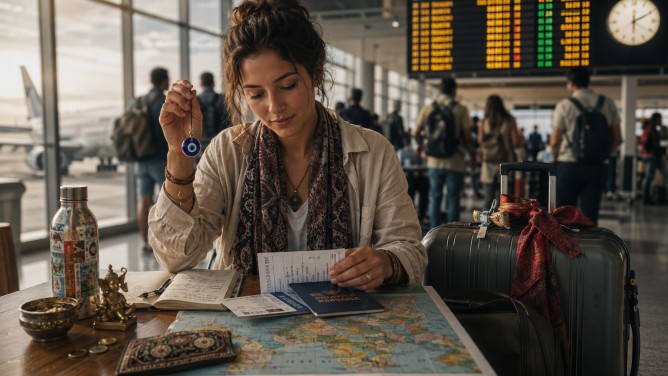
Traveling often comes with an array of traditions and rituals that add a special touch to the journey. Across various cultures, certain superstitions have emerged to help travelers attract good fortune and protection while on their adventures. Despite lacking scientific backing, these beliefs remain a fascinating aspect of travel culture, serving as a way to preserve family traditions and cultural identity.
In the Balkans, a common practice involves placing a clove of garlic inside one’s luggage. This age-old ritual is believed to ward off negative energy and the evil eye, providing a layer of protection against bad luck during travel. Similarly, in parts of the Middle East and the Balkans, families might sprinkle or pour water behind a departing traveler. This act is symbolic of a smooth and safe journey, with hopes for the traveler’s safe return.
Some superstitions are more about personal habits that provide comfort and confidence. For instance, many travelers have developed the habit of touching or tapping the outside of an airplane before boarding. This gesture is thought to bring good luck and calm nervous flyers. Another ritual involves stepping onto the aircraft with the right foot first, a practice believed to ensure a positive start to the trip and invite good fortune.
Numbers also play a significant role in travel superstitions. In Western culture, the number 13 is often considered unlucky, while in China, the number 4 is avoided due to its phonetic similarity to the word for death. Italy has its own unlucky number, 17. These beliefs can influence decisions such as hotel room assignments and building floor numbers. Additionally, travelers in Slavic cultures might sit on their packed luggage for a brief period before leaving, a moment of quiet reflection believed to mentally prepare them for their journey.
Finally, the act of sweeping the floor immediately after someone leaves is considered unlucky in several cultures. The belief is that sweeping too soon could metaphorically sweep away the person’s good fortune or disrupt their safe return. While these customs may seem peculiar, they continue to enrich the travel experience by weaving a tapestry of cultural narratives and personal comfort rituals, highlighting the universal desire for safe and prosperous adventures.