
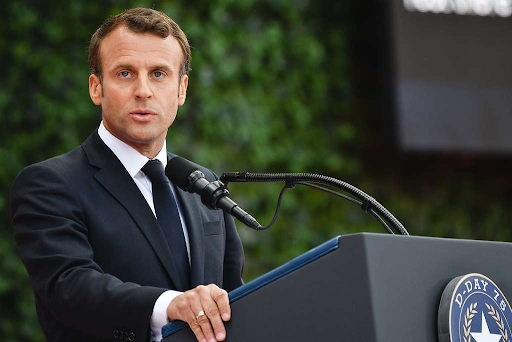
Emmanuel Macron’s speech at the AI Impact Summit in Delhi was not a diplomatic exercise. It was a moral argument, delivered with the authority of a head of state and the urgency of a parent. At a moment when the world’s most powerful technology is largely controlled by a handful of American companies and a few Chinese rivals, Macron insisted that democratic governments must assert their right — and their duty — to set limits.
The specific focus of his intervention was child safety. He cited Elon Musk’s Grok chatbot, which had been used to generate tens of thousands of sexualised images of children, as a stark illustration of what unregulated AI looks like in practice. He referenced research by Unicef and Interpol showing that 1.2 million children had been victims of AI deepfakes in a single year. And he made a simple but powerful argument: if something is illegal in the physical world, it must also be illegal online.
Macron was pushing back against a specific critique from the Trump administration, whose AI adviser had used the summit to attack the EU’s AI Act as hostile to innovation. Macron’s counter was that Europe is not opposed to innovation — it is opposed to innovation that harms people. He framed regulation not as the enemy of progress but as its precondition: a digital environment that parents and users can trust is more valuable than one where anything goes.
The broader atmosphere at the summit was one of competing visions. Narendra Modi called for open-source AI development and warned against monopolies. António Guterres called for inclusive global governance. Sam Altman spoke of AI systems so powerful they might soon exceed the total intellectual output of humanity. Dario Amodei worried about autonomous AI and its potential for misuse. In this landscape, Macron’s focus on children functioned as a moral anchor — a way of bringing the debate back to the people most at risk.
France’s G7 presidency will test whether Macron’s words translate into coordinated international action. The early signs are promising: there is growing political appetite across democratic governments for enforceable AI standards, particularly where children are concerned. What Delhi showed is that the appetite exists. What remains to be seen is whether the political will can overcome the lobbying power of an industry that has, until now, largely written its own rules.