
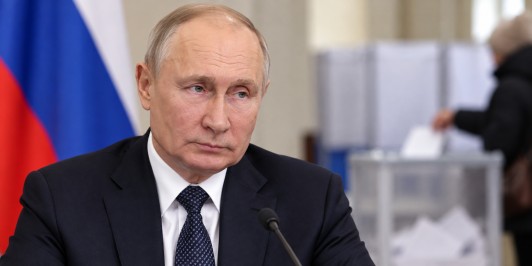
Russian President Vladimir Putin has claimed that the high voter turnout in the recent parliamentary elections is a testament to the public’s backing of the government’s military and national security initiatives, particularly regarding the ongoing campaign in Ukraine. The elections, conducted from September 18 to 20, saw a turnout of 59.3%.
Putin asserted that the election results reflect the Russian populace’s trust in the current policies, further noting that this confidence extends to the soldiers deployed in Ukraine. The near-final results showed the ruling United Russia party securing more than 57% of the vote and winning 355 out of 450 seats in the State Duma, equating to almost 80% control of the lower house.
The elections took place under strict political conditions, with many opposition candidates who are against the war in Ukraine barred from participating. This environment has led to questions regarding the extent of genuine electoral support versus the effects of restricted political competition.
The results have been positioned by the Kremlin as a validation of its strategies and priorities, but the context of political control and exclusion of dissenting voices remains a critical factor in understanding the broader implications of the vote.