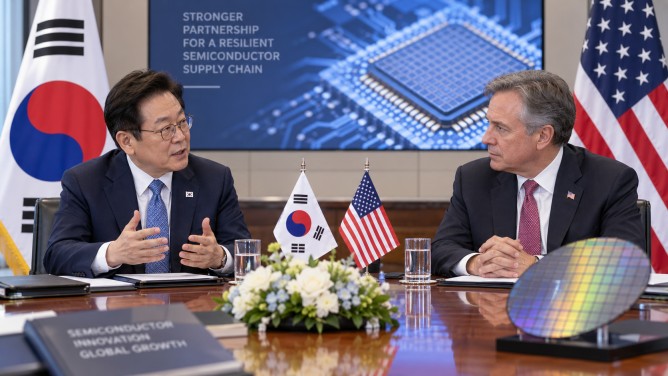
South Korea and the United States are currently engaged in discussions regarding potential semiconductor investments in the U.S., as part of a larger framework of bilateral negotiations. This development comes amid considerations by Washington to impose new tariffs on semiconductor imports, which could result in increased costs for companies that do not boost their production within the United States.
In an investment agreement forged last year, South Korea pledged $350 billion towards manufacturing investments in the U.S. The pact also specifies that South Korean semiconductor manufacturers should receive tariff treatment at least as favorable as that extended to other major partners in the semiconductor trade. This is particularly significant given South Korea’s status as the home base for Samsung Electronics and SK Hynix, two leading global providers of memory chips.
The demand for products from these South Korean chipmakers has surged as technology companies around the world ramp up their investments in artificial intelligence infrastructure. The ongoing negotiations and potential investments are part of a strategic effort to bolster semiconductor production in the U.S., aligning with economic and technological priorities shared by both nations.
In addition to these economic discussions, separate dialogues on national security matters between Seoul and Washington have seen limited progress. These talks include South Korea’s aspirations to develop a nuclear-powered submarine, highlighting the complex interplay between economic and security interests in the bilateral relationship.